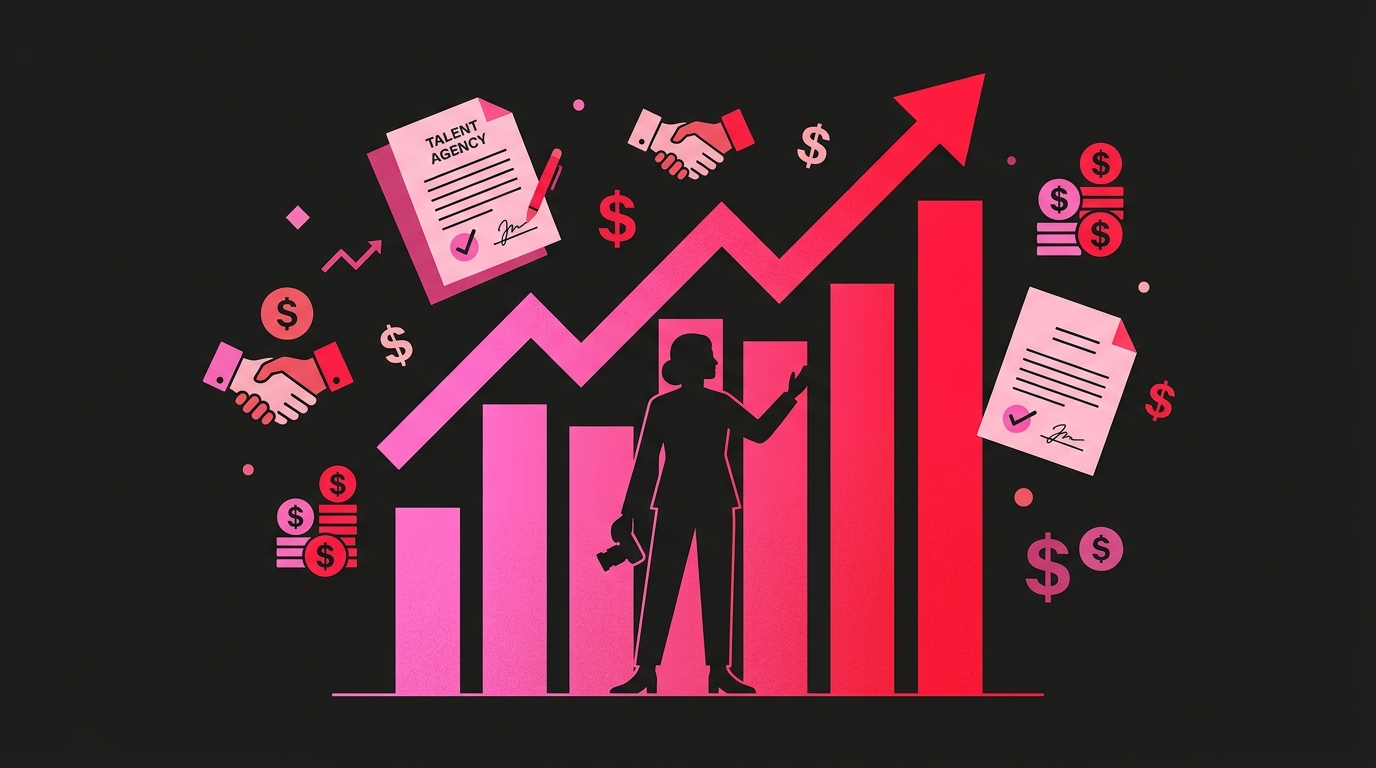
For years, "creator economy" felt like a buzzword slapped on a side hustle. A TikTok here, a sponsored post there. Something kids did between classes. But in 2026, something fundamentally shifted — and it's now impossible to ignore. Creators aren't just making content anymore. They're negotiating agency contracts, headlining major sporting events, and commanding deals that would make traditional celebrities double-check the numbers. The industry has arrived. And the suits are finally showing up to the party.
The NBA Said 200+ Creators. Let That Sink In.
When the NBA was planning its All-Star Weekend in Los Angeles this February, league executives made a decision that would've been unthinkable five years ago: they didn't just invite celebrities and media. They invited more than 200 digital content creators — giving them behind-the-rope access to every high-gloss event the league had to offer.
YouTube basketball star Jesser was among them, appearing in live broadcasts and on-court competitions. Influencer and comedian Druski showed up. Creators with a combined following of over one billion people streamed, posted, and documented the weekend in real time. The NBA didn't do this out of generosity — they did it because they're fighting media fragmentation and desperately need to reach Gen Z on their terms. Creators are now the media.
"If I were to give a motto or a tagline to the creator economy for 2026, it would be 'We've arrived' — and that applies to every aspect of the business."
— Variety, March 2026
The Agency Gold Rush Is Real
Parallel to the NBA moment, a quieter but equally significant thing has been happening in the back rooms of Los Angeles and New York: talent agencies built specifically for digital creators are proliferating at a breakneck pace.
Brooke Meister and Alex Dochter just launched Link Management, a boutique firm dedicated exclusively to digital talent. Agentio — which calls itself the first ad platform built specifically for creator content — recently brought on Rhett & Link (of Good Mythical Morning fame, the most-watched daily morning show on the internet) as strategic advisors to help unlock scalable brand partnerships for the next generation of digital talent. Meanwhile, Variety is tracking what it calls a "proliferation" of agencies entering the space.
This isn't a coincidence. It's a response to money. Brands spent billions on creator-led marketing campaigns in 2025, and that number is climbing steeply into 2026. The old model — a creator with a Gmail address negotiating a brand deal solo — just doesn't scale anymore when the contracts get this large.
The $21 Billion Creator Marketing Industry Just Got a New Startup
If you needed more proof that serious money is moving into this space, look no further than what happened at the beginning of March. Cami Tellez — founder of Parade, the Gen Z underwear brand that became a case study in creator-first marketing — announced she's launching a brand new company targeting the $21 billion creator marketing industry, with $4 million in seed funding already locked in.
The pitch? Brands are still fumbling the bag when it comes to managing creator campaigns and measuring what's actually working. Tellez built Parade into a major DTC brand using creators as the primary growth engine — and now she wants to bottle that playbook and sell it to everyone else. The fact that investors wrote a $4M check on the idea before the product was even fully built says everything about the moment we're in.
What This Means If You're a Creator Right Now
The creator economy clearing $250 billion globally in 2026 — with projections pointing toward $500 billion by 2030 — isn't just a headline. It's a structural shift in how attention, media, and money work together. Some practical takeaways for creators watching this play out:
- Representation is becoming standard, not optional. As brand deals grow in size and complexity, having a manager or agent isn't just for the top 1% anymore. It's basic infrastructure for anyone running creator work like a business.
- Legacy media needs you more than ever. The NBA didn't invite 200 creators as a PR stunt — they did it because they genuinely can't reach young audiences without them. That leverage is real. Use it.
- Follower count is dead, engagement is everything. Per creator economy executives surveyed last year: "2025 was the year where the algorithm completely took over, so followings stopped mattering entirely." Brands and agencies are buying attention and outcomes — not vanity metrics.
- New platforms and infrastructure are being built for you. From Agentio to Tellez's new company, serious operators are building tools to make creator monetization more professional and scalable. These aren't toys — they're the plumbing of the next media industry.
The Vibe Check: Are We in a Bubble, or Is This Real?
Fair question. Every gold rush comes with snake oil salesmen, overpriced courses, and hype cycles that don't survive contact with reality. The creator economy has had its share of all three. But the signals this time are different: these aren't just platform promises or influencer marketing moonshots. We're talking about the NBA — a century-old institution — restructuring its media strategy around digital creators. We're talking about experienced operators raising institutional capital to build B2B infrastructure. We're talking about creators with billions of followers collectively being treated as a legitimate media class.
That's not a bubble. That's an industry maturing in real time.
The question for creators in 2026 isn't whether the money is real — it clearly is. The question is whether you're building your operation to capture it. The ones who treat this like a professional business — with management, strategy, and real infrastructure — are the ones who'll still be here when the dust settles. The ones treating it like a hobby? They'll be watching from the outside wondering how they missed it.