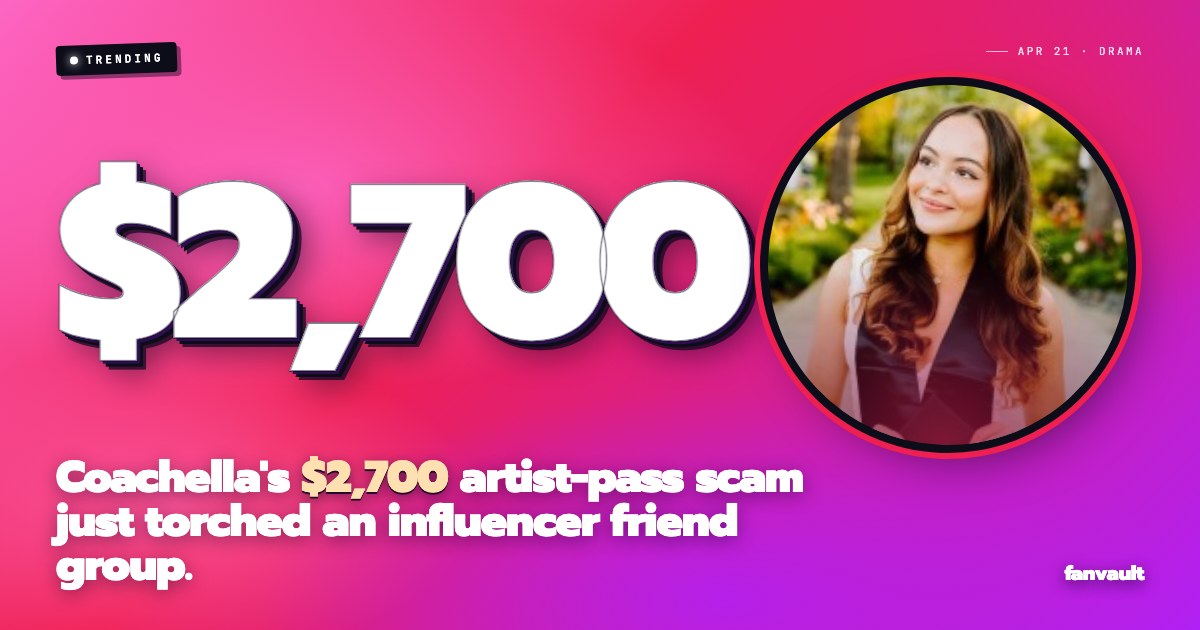
Two TikTok creators say their own friends pocketed $2,700 worth of Coachella Artist wristbands and left them paying again at the gate. Aioni Cobia and Mia LoCastro's accusation video has cleared 5M views in days, naming four fellow creators by handle and posting receipts. It's the most-watched piece of creator-on-creator drama of festival season, and it's not really about wristbands.
⚡ Key Takeaways
- TikTok creators Aioni Cobia and Mia LoCastro say they each paid $2,700 for Coachella Artist wristbands that never arrived.
- Their accusation video, naming four fellow creators including Chloe Rosenbaum and Ryan Manick, cleared 5M views in days.
- Rosenbaum's response, calling the situation a "mix-up" and the backlash "childish," detonated the story rather than defusing it.
- The drama is part of a broader Coachella 2026 ticket-fraud wave that The Washington Post and NBC Palm Springs are calling "Scamchella."
- Creator-to-creator deals still run on Venmo and IG DMs with no contract, no escrow, and no platform recourse.
- Fans get more buyer protection on a $40 PPV post than these creators got on a $2,700 wristband swap.
What actually happened?
Cobia and LoCastro say they each wired $2,700 to a vendor that fellow creator Chloe Rosenbaum vouched for, expecting green-tagged Artist wristbands. Those are the top-tier credentials normally reserved for performers and their inner circles, granting stage-side views and golf-cart transport across the polo grounds, per Coachella.com. When the vendor allegedly went dark, Cobia tracked him down. He told her the actual passes had already been handed off to Rosenbaum's group, according to Page Six.
Then came the photo evidence. Boyfriend Ryan Manick, who allegedly only paid the $1,200 VIP rate, was spotted backstage wearing the green tag. Keston Wolf and Parys Townsend were also named in the accusation. The receipts video went up on April 19.
By April 21, it had spawned reaction channels and pulled in screenshot dumps of the group chat. Rosenbaum eventually broke her silence on TikTok, calling the situation "a mix-up" and the backlash "childish." That framing functioned as gasoline.
"They stole our artist bracelets."
Aioni Cobia, TikTok creator, alleged victim, Page Six
Why does this matter for creators?
Creator friend groups now function as informal business partnerships. They split hotel rooms, brand-trip favors, ticket buys, and "I know a guy" connections, all on Venmo and disappearing IG DMs. When the favor goes sideways, there's no contract, no escrow, no platform recourse. Just whatever audience you can mobilize.
Cobia and LoCastro got only a partial refund and had to spend thousands more on replacement tickets to actually attend the festival they'd already "paid" for, per Page Six via AOL. The fact that a 5-million-view TikTok is now the closest thing they have to a small-claims court tells you everything about how this layer of the creator economy gets enforced. It's not the legal system. It's the algorithm.
What's the bigger picture?
The drama is landing inside a broader Coachella 2026 ticket-fraud surge that mainstream outlets have already branded "Scamchella." The Washington Post documented attendees getting cleaned out by third-party "plug" resellers across both weekends (April 10-12 and April 17-19). NBC Palm Springs reported a documented uptick in fraud complaints tied to off-platform reseller groups.
What makes the Cobia and LoCastro version detonate beyond a normal ticket scam is who the alleged middlemen are. They're not anonymous scalpers. They're named, followable creators posting from inside the same festival their friends say they got locked out of. That's a new genre of receipts-driven creator drama, and the only enforcement mechanism on the table is audience reach.
What does Fanvault think?
The fans of these creators get more buyer protection on a $40 PPV post than the creators themselves got on a $2,700 Venmo. That's the punchline. Fanvault was built so creator-to-fan commerce runs on Stripe Connect, verified onboarding, and an 8% platform fee, with every transaction logged and refundable. That's the same plumbing the rest of e-commerce takes for granted.
Creator-to-creator commerce (the wristband swap, the brand-trip favor, the "I know a guy") is still being transacted in Notes apps and disappearing DMs. Until creators carry the same infrastructure into their own business dealings that they expect from the platforms underneath them, the Scamchellas will keep happening. TikTok will keep being the appeals court.
The wristbands were never the point. The point is that the most visible people in the creator economy are still running their own business on the honor system. The honor isn't holding.
Frequently Asked Questions
What is a Coachella Artist pass and why is it so valuable?
The Artist wristband is Coachella's top-tier credential, normally issued to performers and their inner circles. It grants stage-side views, backstage access, and golf-cart transport across the polo grounds, per Coachella.com. It sits well above the standard VIP tier in both access and social-media bragging rights, which is precisely why a green-tagged wristband is the most photographed accessory of festival weekend.
How much did Cobia and LoCastro actually pay, and what did they get back?
Aioni Cobia and Mia LoCastro each sent
What did Chloe Rosenbaum say in response?
Rosenbaum posted a TikTok of her own calling the situation "a mix-up" and the public backlash "childish." The framing escalated rather than defused the story, and reaction creators piled in within hours. As of late April she has not publicly walked back either characterization.
Is this part of a bigger Coachella scam story?
Yes. Both The Washington Post and NBC Palm Springs have documented a surge in third-party reseller fraud across the 2026 festival's two weekends, with the trend nicknamed "Scamchella." The Cobia and LoCastro story is the highest-profile influencer-on-influencer version of a much wider attendee-level pattern.
What does this say about how creators do business with each other?
Most creator-to-creator deals (split hotel rooms, brand-trip favors, "I know a guy" ticket connections) run on Venmo and Instagram DMs with no contract, no escrow, and no buyer protection. When something goes sideways, the only recourse is a viral video. A creator's audience effectively becomes their small-claims court, and the algorithm is the judge.