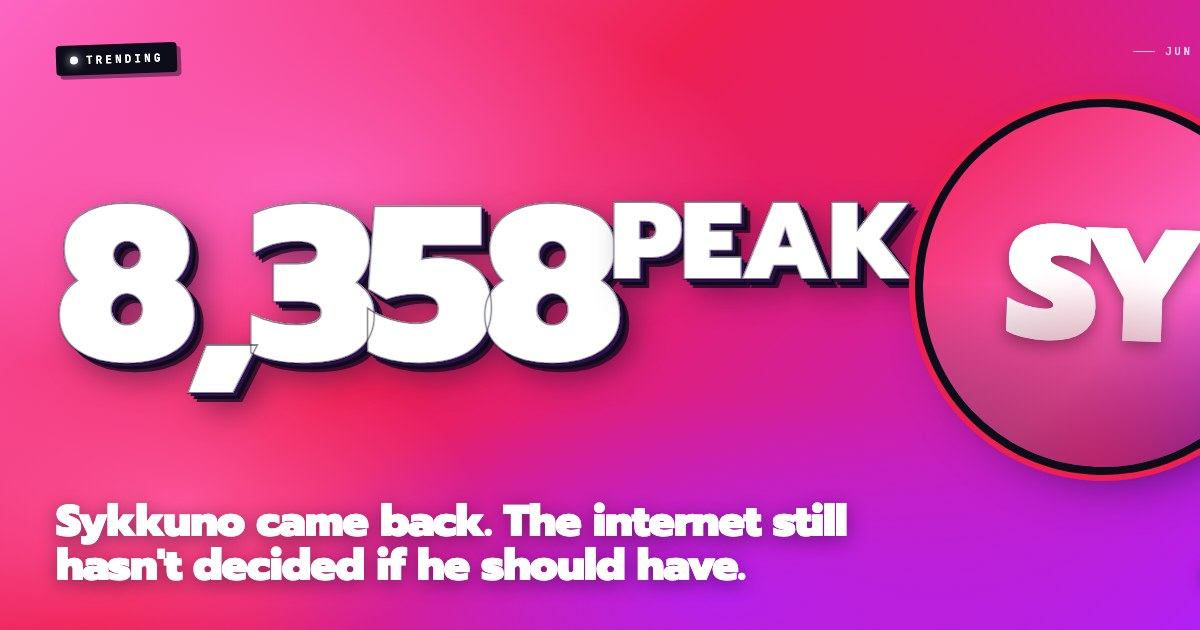
Sykkuno returned to Twitch on June 3 with a stream titled "I'M BACK," roughly two months after admitting he cheated on his girlfriend of five years. The numbers tell a story his apology can't. His comeback peaked at 8,358 viewers against an all-time high of 111,373, and his active sub count has collapsed from 39,447 to 596. The parasocial bond is still there, but most of the audience isn't.
⚡ Key Takeaways
- Sykkuno returned to Twitch on June 3 with a 2.5-hour stream titled "I'M BACK," opening with "What I did to her was horrible."
- Peak viewership came in at 8,358 against a pre-scandal average of 12,455 and an all-time high of 111,373, a roughly 78 percent reach collapse.
- His active sub base has fallen from a high of 39,447 to 596 paid and gifted combined, the cleanest case of monetization-layer punishment all year.
- The April allegations started with a 32-page document from VTuber HemomalVT and pulled in five more women within 72 hours.
- Pokimane, xQc, and Asmongold publicly clashed over the word "victims," and the same debate cycle reignited the week Sykkuno came back.
- Takeaway for creators: at 15 to 20 percent platform fees and zero crisis infrastructure, you're renting the wrong audience relationship.
What actually happened?
On June 3, Sykkuno went live with a 2.5-hour Twitch stream and opened with "What I did to her was horrible," per Dexerto. It was his first broadcast since April 16, when he and his girlfriend of five years released a joint statement admitting he had been unfaithful. The admission landed six days after VTuber HemomalVT published a 32-page Google Doc accusing him of running a years-long pattern of cheating, with audio, DMs, and corroborating testimony from streamer Bao, per Dot Esports.
Within 72 hours, five more women (Lena, Dotty, Chysai, NamiKatsumi, and Leia) went public with their own accounts. Sykkuno's entire brand was the soft-spoken, hands-over-mouth nice guy of variety streaming. HemomalVT's document called him "a serial cheater, liar, and manipulator who uses his status to get what he wants from as many women as possible." For a creator whose persona WAS the wholesomeness, there was no edgelord fallback identity to retreat to.
Why does this matter for creators?
This isn't a story about forgiveness. It's a stress test of the 2026 creator-economy rehab playbook, and the numbers say the algorithm doesn't forgive nearly as fast as the audience. Sykkuno's 30-day post-return average sits at 2,737 viewers, with that peak of 8,358, per TwitchTracker. His pre-scandal historical average was 12,455, a roughly 78 percent collapse in reach.
The sub economics are worse. Sykkuno's active sub base has fallen from an all-time high of 39,447 to 596 paid and gifted combined, and he's shed roughly 22,360 followers in the 30 days since coming back. That's a 98.5 percent sub wipeout, the audience equivalent of a mid-sized streamer's entire base, vaporized in a single month. The rehab arc works at the parasocial layer, but it does not yet work at the monetization layer.
Reach also doesn't auto-recover. Only nine hours of stream time across the 30-day window says he's pacing himself, not running a recovery sprint. Sponsorship-eligible inventory shrinks when concurrent viewership halves and halves again. The Twitch payout model that already favors the top of the curve gets brutal fast once the curve is no longer your friend.
"What I did to her was horrible. In the time I've been gone, I've been working every single day to try to make things better."
Sykkuno, June 3, 2026 return stream
What's the bigger picture?
The discourse around the return is its own story. When the original allegations hit in April, Pokimane went on stream and said she was "sorry for all the hurt that's been caused to the victims," prompting xQc to fire back on X demanding she "elaborate on victims of WHAT?" Asmongold split the difference, calling the women victims of "a manipulator" but not of a crime. The week of June 11, that exact debate cycle reignited, because Sykkuno's return forced every top streamer to take a position again.
That re-litigation is the thing platforms don't price in. Twitch doesn't have a crisis-management product. YouTube doesn't have a controlled-comeback offering. There's no record-label-style PR architecture, just a creator, an apology, and a follower count that bleeds in real time while the discourse cycles back through every top channel they ever shared a screen with.
What does Fanvault think?
The Sykkuno arc is the cleanest 2026 example of why creators rebuilding a brand can't afford to rent their audience from a platform that profits whether they survive the news cycle or not. Fanvue takes 15 percent, Passes takes 10 percent plus $0.30, Fanfix takes around 20 percent, and none of them give a creator infrastructure to own the audience relationship through a crisis. Fanvault takes 8 percent, keeps 92 percent in the creator's pocket, and bundles subs, paywalled posts, paid DMs, tips, wishlists, and an authenticated-memorabilia storefront so a single bad month doesn't vaporize everything. When the parasocial bond is the product, the creator needs to own the rails, not lease them.
Sykkuno may eventually claw back his viewership. The 39,447 subs are not coming back, and the next creator caught in a similar arc will learn the same lesson at a worse exchange rate.
Frequently Asked Questions
What happened with Sykkuno and the cheating scandal?
In April 2026, VTuber HemomalVT published a
How much has Sykkuno's audience actually dropped since his return?
His 30-day post-return average sits at
Who has spoken out about the Sykkuno allegations?
Pokimane addressed the allegations on stream in April, calling the women "victims," which xQc challenged on X and Asmongold parsed as "victims of a manipulator, not of a crime," per Sportskeeda. Valkyrae also addressed the situation publicly during the original April cycle. The discourse reignited the week of June 11 after the return stream forced everyone to re-litigate the position.
What does the Sykkuno arc say about creator-platform economics?
It says the platform layer has effectively zero crisis-recovery infrastructure. Twitch, YouTube, and the major monetization platforms do not offer a controlled-comeback product. Creators in a brand crisis are left to bleed in real time on a follower count and active sub base they don't own, while the platform keeps taking 15 to 20 percent off whatever revenue does survive. On Fanvault, the fee is