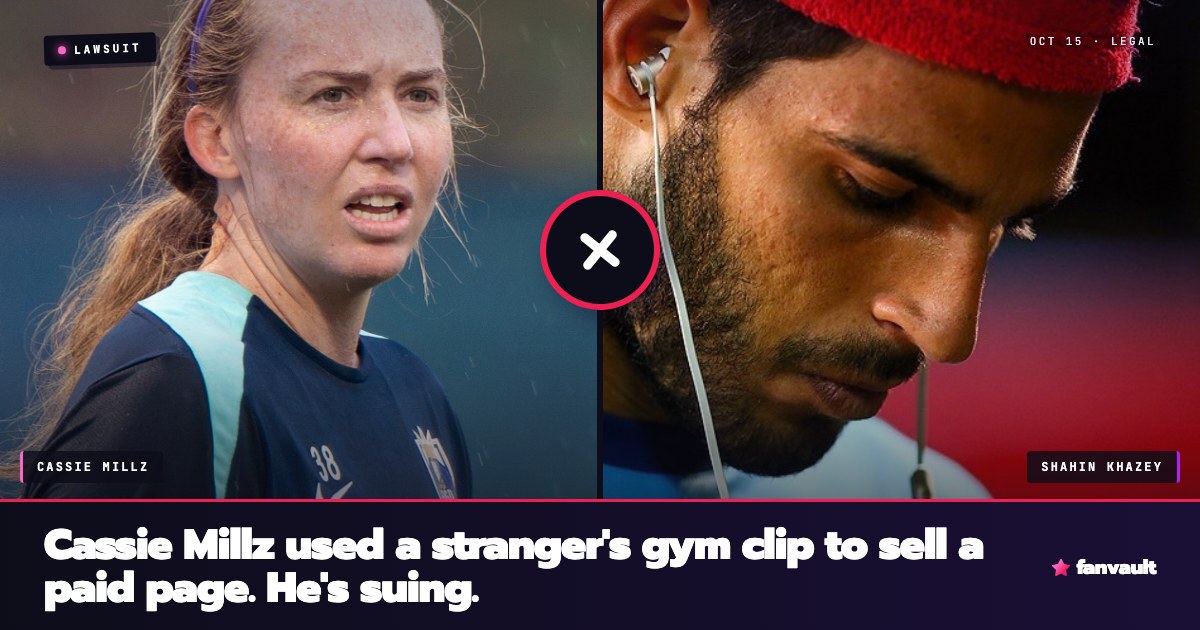
A Southern California engineer is suing creator Cassie Millz in federal court, alleging the creator lifted his gym video, recast it as pre-transition footage in an Instagram Reel that hit 3.3 million views, and used it to funnel viewers to a paid OnlyFans page. The 25-page complaint, first reported by PPC Land, stacks copyright, false association and likeness claims onto a single borrowed clip.
⚡ Key Takeaways
- An engineer sued creator Cassie Millz on Oct 15, 2026, alleging his gym clip was reposted as pre-transition footage.
- Per the complaint, the Reel hit 3.3M views and funneled viewers to a paid OnlyFans page.
- The 25-page suit pleads eight claims: copyright, Lanham Act false association, right of publicity, emotional distress and more.
- Statutory damages run $750 to $30,000 per work, up to $150,000 if willful, but registration timing may shut that door.
- Nothing is decided: the creator hasn't responded, no judge has ruled, and PPC Land is the only outlet reporting the details.
- The lesson for creators: a paid link in bio turns a borrowed clip into a commercial use.
What actually happened?
Shahin Khazey filed the complaint on October 15, 2026 in the Central District of California, case number 5:26-cv-06085, according to Justia Dockets. Besides Cassie Millz, the suit names 35 unnamed Doe defendants. Khazey runs his own engineering company and a fitness Instagram account, and he posted the workout clip in April 2026, per PPC Land. He is represented by Kinney Law in Los Angeles and has demanded a jury trial.
The complaint alleges the clip was reposted as footage of the creator before transitioning, in a Reel that reached 3.3 million views and pointed viewers to a paid subscription page. Khazey says strangers harassed him, a client walked away, and the creator refused to take the videos down. Cassie Millz, who has roughly 290,000 followers across Instagram, TikTok and YouTube, had not responded in court, and no judge has ruled. Everything here is an allegation, not a finding.
The complaint pleads eight causes of action, which break down like this:
- Copyright infringement under Section 501 of the Copyright Act
- False designation of origin and false association under the Lanham Act
- Statutory and common law misappropriation of publicity under California law
- Intentional infliction of emotional distress, false light, and two unfair competition claims
Why does this matter for creators?
Because this is the funnel. The transition, glow-up and before-and-after Reel is one of the most reliable ways to turn short-form views into paid subscribers, and the link in bio is what makes it a business. That same link is what turns a lazy repost into a commercial use.
Copyright protects the video as a piece of authorship. Right of publicity and the Lanham Act protect the person shown in it. When someone else's body is doing the selling, both sets of claims can land on the same clip, and "everyone reposts" stops working as a defense.
Our read: if a stranger's footage sits inside your funnel, you are betting your revenue on that stranger never scrolling past it. Khazey scrolled past it.
"In a case where the copyright owner sustains the burden of proving, and the court finds, that infringement was committed willfully, the court in its discretion may increase the award of statutory damages to a sum of not more than $150,000."
Copyright Act, Section 504(c)(2), Cornell LII
Where does this go from here?
The money question is registration timing. Under Section 504(c) of the Copyright Act, as published by Cornell LII, statutory damages run from $750 to $30,000 per work, and up to $150,000 if a court finds the infringement willful. But Section 412, also on Cornell LII, generally bars statutory damages and attorney's fees for infringement that began before registration took effect.
PPC Land reports Khazey registered the copyright in June, which raises whether that six-figure ceiling is even on the table. If the Reel went up first, the fight likely shifts to actual damages and the creator's profits. That is where the paid-account traffic stops being color and becomes evidence. Subscription revenue tied to a viral clip is a number a plaintiff can actually chase.
One caveat matters here. So far PPC Land is the only outlet reporting the complaint's details, while the PacerMonitor and Justia dockets confirm the parties, filing date, counsel and the copyright claim. Neither party has issued a public statement in the reporting so far.
Next comes service and a response. Watch whether this ends in a quiet settlement and takedowns, or whether a judge gets to rule on how far publicity and false-association claims reach when an ordinary person's clip gets repurposed to sell access to a paywall.
Short-form creators borrow footage constantly. This lawsuit is a reminder that the person in that footage can sue, and the paywall link is exhibit A.
Frequently Asked Questions
Who is suing Cassie Millz and why?
Shahin Khazey, a Southern California engineer who runs a fitness Instagram account, filed a federal complaint on
What claims does the lawsuit make?
The complaint pleads eight causes of action: copyright infringement, false association under the Lanham Act, statutory and common law right of publicity, intentional infliction of emotional distress, false light, and two unfair competition claims. The Justia docket lists copyright as the lead cause of action.
How much money could the plaintiff win?
Statutory damages for copyright infringement run from
Why does a paid subscription link matter in a repost case?
A repost that drives traffic to a paid page looks like a commercial use, which strengthens likeness and false-association claims. It also creates measurable profits a plaintiff can pursue even if statutory damages are off the table.