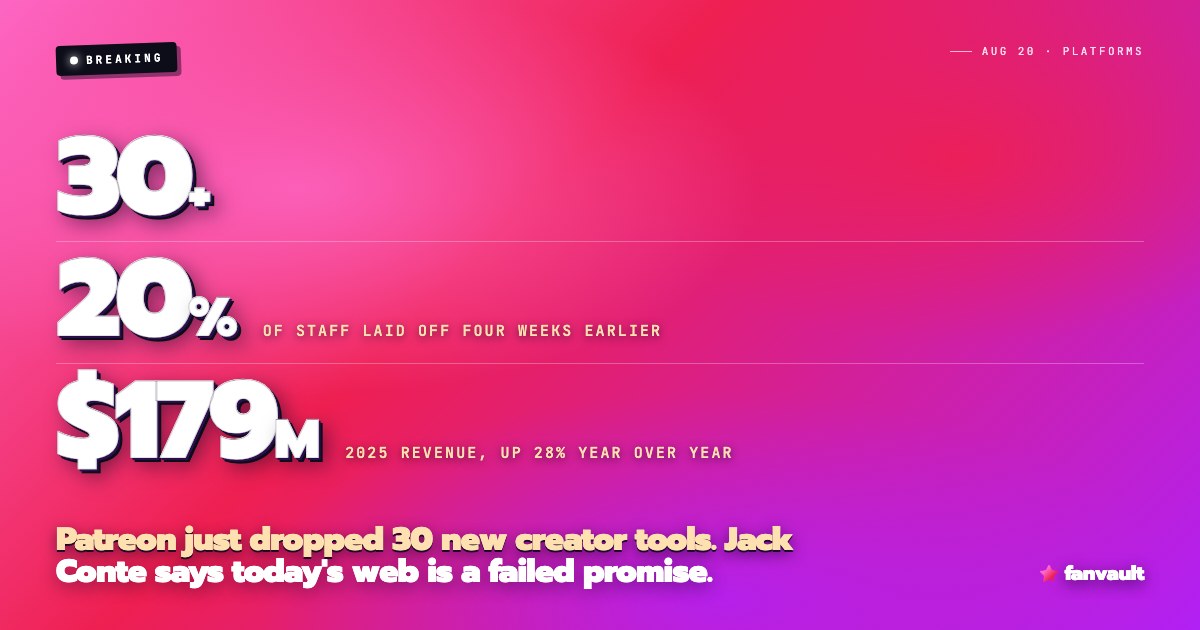
Patreon just shipped its largest product overhaul ever. On August 20, 2026, CEO Jack Conte unveiled 30+ new and revamped creator features, headlined by a short-form video format called Clips, a public-post format called Quips, topic-based communities called Niches, and a rewritten discovery algorithm that ranks by craft instead of follower count. The framing was blunt. Conte says the current internet is a "failed promise for creators and fandoms," and that social media has "made it increasingly difficult to build a creative community and business."
⚡ Key Takeaways
- Patreon shipped 30+ new creator tools on August 20, 2026, headlined by Clips, Quips, Niches, and a rewritten discovery algorithm.
- CEO Jack Conte called the current internet a "failed promise for creators and fandoms," openly positioning the platform against YouTube and TikTok.
- The rollout landed four weeks after Patreon laid off 20% of its staff (93 employees), its largest cut since 2022.
- The new discovery algorithm ranks posts by topic, craft, style, and theme, meaning smaller creators can surface next to giants if the post is good.
- Fanvault charges 8% (creators keep 92%) vs Patreon's 10% for post-August-2025 creators, and ships a full storefront (auctions, drops, memorabilia) alongside subscriptions from day one.
What actually happened?
Per TechCrunch, Clips lets creators turn paywalled videos into shareable short-form snippets on iOS, either exported to TikTok and Reels or posted natively as Quips inside Patreon's own feed. Niches slots creators into topic-based communities, and the new discovery algorithm ranks individual posts by topic, craft, style, and theme instead of surfacing whoever already has scale. Tubefilter read the rollout as Patreon openly positioning against YouTube and TikTok, not slotting in beside them.
The timing is the tell. Patreon laid off 20% of its staff (93 employees) on July 23, 2026, its largest cut since 2022, per Variety. Four weeks later, Conte's manifesto arrived. Patreon disclosed $179M in 2025 revenue (up 28% year over year), and says creators have earned more than $10B on the platform to date.
Why does this matter for creators?
Because Patreon just publicly conceded that the tip-jar model wasn't enough. For years, the pitch was "we handle billing, you go get your audience on YouTube." That pitch is dead in 2026. Clips, Quips, Niches, and the new algorithm are a bet that Patreon has to do audience acquisition itself now, because the feeds creators used to rent reach on are broken.
The math for a smaller creator changes overnight. A rewritten discovery algorithm that ranks posts by craft, per BigGo Finance, means a 200-patron cooking creator can surface next to a 200,000-patron one if the post is good. That is a real structural shift, not a cosmetic one. Whether the algorithm actually delivers on that promise in the wild is a separate question, but the intent is unmistakable.
The trade-off cuts both ways. Creators get discovery, but they also get compared to every other creator inside Patreon's own algorithm, which is exactly the trap they were trying to escape when they left YouTube. It is a real bet, not a free upgrade.
"Social media has created mass polarization, addiction, and made it increasingly difficult to build a creative community and business. I refuse to believe that this is the best or only way that the internet can work for creators and fans."
Jack Conte, Co-founder and CEO, Patreon
Where does this go from here?
Patreon is doing what every 2026 creator company is starting to admit needs doing. Follower counts on the big feeds no longer convert to eyeballs, algorithmic distribution has been repriced by AI slop, and creators are looking for a home base they can actually own. Conte is now the loudest name arguing that owned destinations beat rented reach.
But Patreon is arriving at the argument from the subscription side of the map. It is a membership company adding video and discovery on top, which means the storefront layer (drops, auctions, physical goods with provenance, wishlists) still is not really its game. That leaves the door wide open for platforms that started from monetization surface area rather than recurring billing.
What does Fanvault think?
Conte is right about the diagnosis and Fanvault is on the same side of it. Fans belong to creators, not to feeds, and the internet does owe creators a real home base in 2026. Where we differ is the shape of that home base. Fanvault charges 8% and creators keep 92%, versus Patreon's 10% for creators who joined after August 2025.
Every Fanvault storefront also ships from day one with auctions, buy-it-now drops, authenticated memorabilia, wishlists, paid DMs, and a Telegram-native automation layer that handles listings and orders through chat. Patreon just validated the thesis. Our answer is that if creators are re-anchoring in 2026, that anchor should also be a real storefront, not just a members-only feed with better clips.
The next twelve months will decide whether Patreon can actually convert its own diagnosis into distribution. If Conte is right about the failed promise, he just handed every other creator platform permission to say the same thing louder.
Frequently Asked Questions
What exactly did Patreon launch on August 20, 2026?
Patreon rolled out more than
Why is Patreon making this move now?
The rollout arrived four weeks after Patreon laid off
How does Patreon's take compare to Fanvault's?
Both platforms agree that algorithmic feeds have failed creators and that creators need an owned home base. The fee gap is real: Fanvault charges
What does the new discovery algorithm actually change?
According to BigGo Finance, the algorithm ranks individual posts by topic, craft, style, and theme, instead of favoring larger creators similar to ones a user already followed. In practice that means a 200-patron creator can surface next to a 200,000-patron one if the post is genuinely good. Whether the algorithm delivers on that promise once it hits real traffic is a separate question, but the design intent is a structural shift, not a cosmetic tweak.