Kai Cenat and iShowSpeed just played Minecraft for 121 hours straight and pulled 30 million watch hours doing it. The five-day Hardcore marathon ended August 12 when the pair finally killed the Ender Dragon, capping a run that beat multiple 2026 esports leagues on watch time. Two creators, one free-to-play game, no venue budget. The scoreboard was not close.
⚡ Key Takeaways
- Kai Cenat and iShowSpeed's 121-hour Minecraft Hardcore marathon ended August 12 after 42 in-game deaths and a live coach cameo from speedrunner Feinberg.
- The dual-platform stream generated 30M+ total hours watched, outperforming MPL Malaysia S17 and VALORANT Masters Santiago 2026 per Streams Charts.
- iShowSpeed's YouTube feed carried 13.5M hours and a 459,700 concurrent peak. Kai's Twitch peaked at 381,200 across combined co-streams (his fifth-highest ever).
- Kai added 855,904 Twitch followers in the surrounding 30 days.
- The playbook is portable at any scale: a finite goal, a real fail state, and a co-host on a different platform.
- The story is not the 30M watch hours, it is the 855K new followers with no dedicated storefront to convert them on.
What actually happened?
The pair opened a shared Hardcore world on August 7 with one rule: kill all four bosses (Ender Dragon, Wither, Elder Guardian, Warden) without either character dying permanently. They died 42 times, restarted the run, and eventually brought in Minecraft speedrunner Feinberg as a live coach to survive the End and the Deep Dark. Kai broadcast on Twitch, Speed on YouTube, both live around the clock.
The receipts, via Streams Charts: 30M+ total hours watched across the two channels. Speed's YouTube feed carried 13.5M hours and a 459,700 concurrent peak. Kai's Twitch channel added 7.77M hours and a 198,200 peak on his own feed, with combined co-streams pushing the reported number to 381,200, his fifth-highest ever. In the 30 days surrounding the marathon, Kai added 855,904 Twitch followers.
Kai and Speed announced the run on August 6, and the skepticism arrived instantly. A pro Minecraft player warned the stream "may never end", and Reddit spent the next 24 hours predicting a monthslong slog. Kai's on-air response was less patient, "I'm a gamer, bro, and he is a gamer, bro, so when two gamers game, it's over," per SportsKeeda. It took 121 hours to prove.
Why does this matter for creators?
This is one of the cleanest apples-to-apples receipts the creator side has ever produced against Tier-1 esports. Streams Charts benchmarked the marathon against 2026 leagues and found it outperformed MPL Malaysia Season 17 and VALORANT Masters Santiago 2026, trailing only the MLB Midseason Cup. Two people, one free game, no eight-figure production budget. The audience showed up bigger than the leagues that pay for venues and casters.
The mechanics are the takeaway, not the celebrity headline. The rules were legible from second one: four bosses, permadeath, one shared world. The stakes were real (Speed and Kai actually could not fake dying on stream, and they died 42 times). The two hosts owned different platforms so neither pulled from the other's audience.
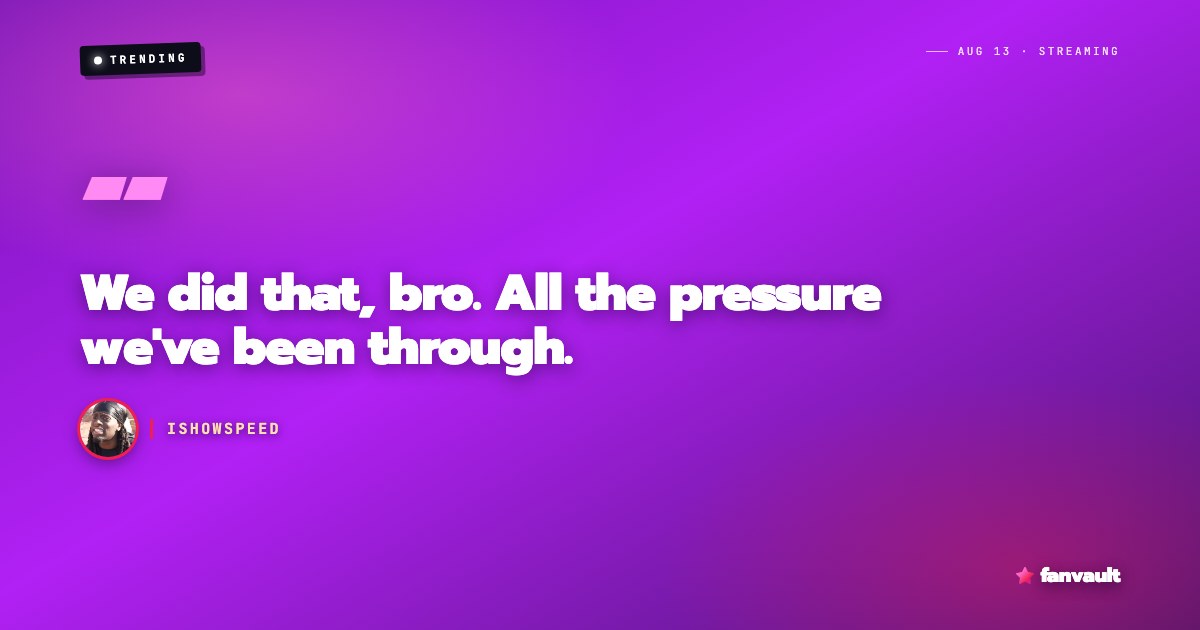
"We did that, bro. All the pressure we've been through."
iShowSpeed, YouTube streamer, immediately after killing the Ender Dragon, via Beebom
What is the bigger picture here?
This is the second Kai and Speed Minecraft Hardcore marathon, and it landed harder than the first. Their August 2024 run cleared the Ender Dragon in 105 hours per an earlier Streams Charts recap. The 2026 version added three more bosses to the win condition, ran 16 hours longer, and out-drew a broader slate of esports events. The pattern is not accidental.
Three ingredients did the work:
- A finite goal, kill all four bosses, that lets the audience know exactly what "winning" looks like.
- A real fail state, permadeath, that gave every mistake stakes and turned the 42 deaths into content.
- A co-host on a different platform, so Kai's Twitch audience and Speed's YouTube audience compound instead of cannibalizing.
Kai has been running variations of the same play for years with his Mafiathon franchise, using tight rules and hard end conditions to compress attention into a single week-long window. Speed, per TIME, entered the marathon with 54.2 million YouTube subscribers after crossing 50M on his 21st birthday in January. Put the two mechanics next to each other on a single free-to-play game and you get 30 million hours watched. The takeaway is not "get more famous," it is "steal the format."
What does Fanvault think?
The 30M watch-hours number is impressive. The 855,904 new Twitch followers Kai added in 30 days is the interesting one. Growth like that is only worth what you can convert it into, and "subscribe to me on the same platform I already reached you on" is the weakest offer in the stack. This is exactly the gap Fanvault closes: one storefront that runs tiered memberships, paywalled posts, paid DMs, wishlists, tips, and authenticated memorabilia auctions in a single account, at an 8% platform fee (creators keep 92%).
The automation layer matters more here than the fee. Kai could list the stream-worn hoodie from hour 93 tonight, spin up a tiered wishlist, and triage new-fan DMs by chat (in-app or on Telegram) without building any of it himself. When the next Kai and Speed moment hits, the winners are the creators who already had somewhere for the audience to land.
121 hours, 30 million watch hours, 42 deaths, one Ender Dragon. The receipts are in on what two creators with a shared idea can pull against a full esports league. The rest of the industry has to decide whether they want to keep printing case studies about it, or start borrowing the format.
Frequently Asked Questions
How long did the Kai Cenat and iShowSpeed Minecraft Hardcore marathon last?
The marathon ran roughly
How many people watched the marathon in total?
Per Streams Charts, the run generated over
Did the marathon actually beat major esports events?
On watch time, yes. Streams Charts benchmarked the marathon against 2026 esports broadcasts and found it outperformed MPL Malaysia Season 17 and VALORANT Masters Santiago 2026, trailing only the MLB Midseason Cup in the comparison set.
That is one free-to-play game and two creators against multi-region leagues with venues, casters, and eight-figure production budgets. The gap is the point.
What can a smaller creator actually copy from this?
The format, not the follower count. A hard, finite goal ("beat X by date Y"), a real fail state (something the audience can watch you lose on camera), and a co-host on a different platform so both audiences compound instead of cannibalizing.
At any scale of following, that structure retains viewers better than an open-ended stream and roughly doubles the addressable audience for the same broadcast hours. The 30M watch hours are a ceiling. The mechanic is portable.