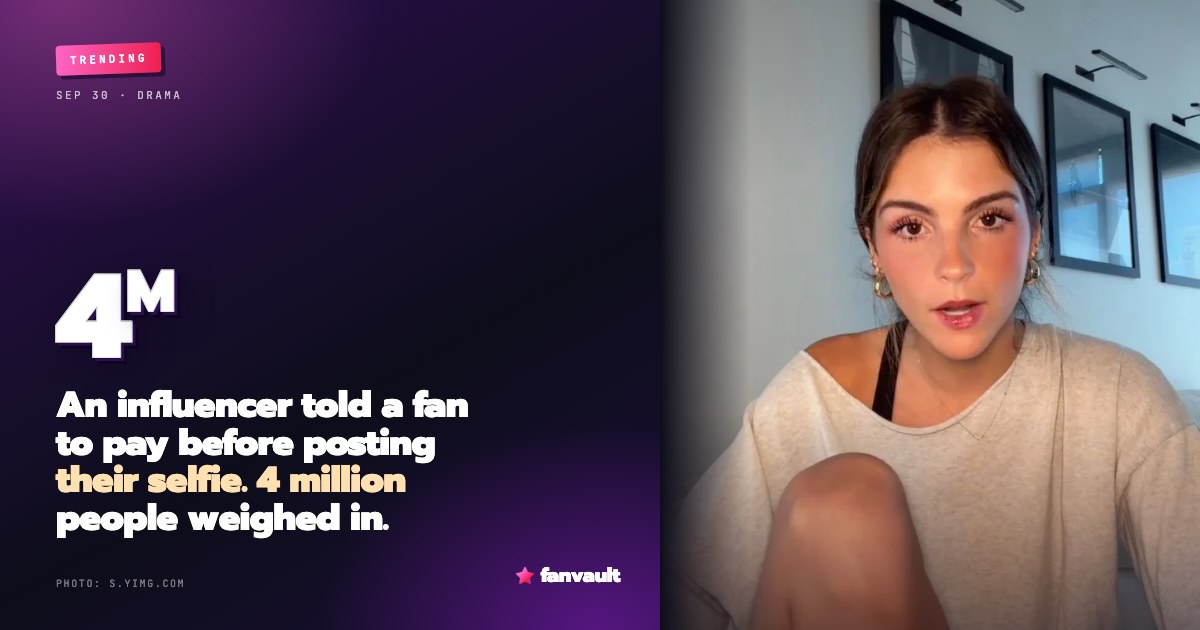
A TikToker says an influencer she'd followed for years told her she couldn't post their selfie without paying. Caraline Catlett's storytime video hit close to 4 million views, and the internet ruled fast: the influencer, still unnamed, lost the argument while Catlett gained followers. It's a messy little parable about likeness, scarcity, and who actually gets paid.
⚡ Key Takeaways
- TikToker Caraline Catlett says an influencer told her she couldn't post their selfie without paying.
- The storytime video reached close to 4 million views, 807,000+ likes, and 9,100+ comments.
- The influencer is unnamed and hasn't responded; everything rests on Catlett's account.
- Catlett refused to name her, and her own follower count grew from the backlash.
- Charging for likeness is legit when fans opt in. A surprise toll on a fan selfie is not.
- Fanvault's take: sell opt-in offers in the open and keep 92% (8% platform fee).
What actually happened?
Per Catlett's account, she had recently moved to San Diego when she spotted an influencer she'd been "obsessed" with and walked up to ask for growth advice and a photo. She says the woman told her "People follow me because I'm attractive," then put a price on the selfie, according to Dexerto. The influencer allegedly added that she doesn't let people capitalize off her face and that there's "not enough room" in the industry for everyone.
"If I take a picture with you, you can't post it without paying me. I don't let people capitalize off my face or grow off my face. There's not enough room in this industry for everyone."
Caraline Catlett, recounting the influencer's words, Dexerto
The video drew close to 4 million views per Dexerto, plus more than 807,000 likes and 9,100-plus comments per Yahoo Entertainment. An earlier snapshot from Bullsource had it past 3.5 million, so the count depends on when outlets checked. Catlett had about 193,000 followers when it broke, per Yahoo, and The Daily Dot reported the reaction drove a bump in her own following.
Commenters begged her to name names. She refused, saying she would never "send people to hate on someone on the internet." Haley Baylee called it "literally such weird behavior" and offered Catlett a collab, and We Got This Covered reported Emilie Kiser chimed in that this isn't normal.
One caveat worth saying out loud: every detail comes from Catlett's telling. The influencer has never been named, verified, or quoted directly, and hasn't responded publicly, as Attack of the Fanboy points out. No money changed hands.
Why does this matter for creators?
Because the influencer wasn't wrong that her face has value. She was wrong about everything else. Likeness is a real asset, and paid appearances, meet-and-greets, and licensed content are legitimate businesses.
The difference is consent. Those are offers a fan opts into with the terms on the table. A surprise toll sprung mid-selfie isn't an offer, it's a shakedown with good lighting.
There's also a basic math problem. A fan posting a selfie with you is free marketing, tagged and shared to their own followers. Charging for it is asking to be paid for advertising yourself.
And look at how it played out. She was supposedly protecting her face from fueling someone else's growth. Instead, the story about her refusal became the growth: millions of views, new followers, and a collab offer, all flowing to the fan.
What's the bigger picture?
The "not enough room" line is the tell. It's scarcity thinking, and it treats your own audience as competition. Fans who follow a creator for years aren't rivals, they're the business.
Creators at the couple-hundred-thousand-follower tier sit in an awkward spot: big enough to get recognized in public, rarely big enough to command a real appearance fee. The pressure to monetize every interaction is real. But creators who build recurring revenue make fans feel like insiders, and creators who make fans feel like threats get turned into content.
The Mary Sue declared the influencer economy has entered its "selfie charge era." The story was still traveling in November, picked up abroad by 111 Next in Brazil. Expect the clip to resurface every time a creator gets caught treating fans like a revenue leak.
What does Fanvault think?
Charge for your likeness, absolutely, just do it out in the open where fans choose it. That's how Fanvault is built: paid DMs, custom requests, tiered memberships, tips, wishlists, and authenticated memorabilia sold through auctions and buy-it-now drops, all offers a fan opts into knowing the price. Creators keep 92% of every sale (an 8% platform fee, versus 15% on Fanvue, 10% + $0.30 on Passes, and roughly 20% on Fanfix). A signed item is a product, a surprise selfie tax is a toll, and only one of them turns fans into recurring revenue.
Your face is worth money. Treating your fans like they're stealing it is the fastest way to make it worth less.
Frequently Asked Questions
Who is the influencer who asked Caraline Catlett to pay to post their selfie?
Nobody knows publicly. Catlett has refused to name her, saying she would never "send people to hate on someone on the internet," per Dexerto. The influencer hasn't responded publicly, and all details come from Catlett's telling.
How viral did Catlett's TikTok get?
Close to 4 million views, according to Dexerto, with more than 807,000 likes and 9,100 comments per Yahoo Entertainment. Counts vary because outlets checked at different times.
Is it OK for creators to charge fans for their likeness?
Yes, when fans opt in knowing the terms. Paid appearances, meet-and-greets, custom requests, and licensed content are all legitimate. The backlash here was about springing a fee on a fan mid-interaction and framing fans as competition.
How do creators monetize fan demand on Fanvault?
Through opt-in offers: paid DMs, custom requests, tiered memberships, tips, wishlists, and authenticated memorabilia via auctions and buy-it-now drops. Fanvault charges an 8% platform fee, so creators keep 92%.