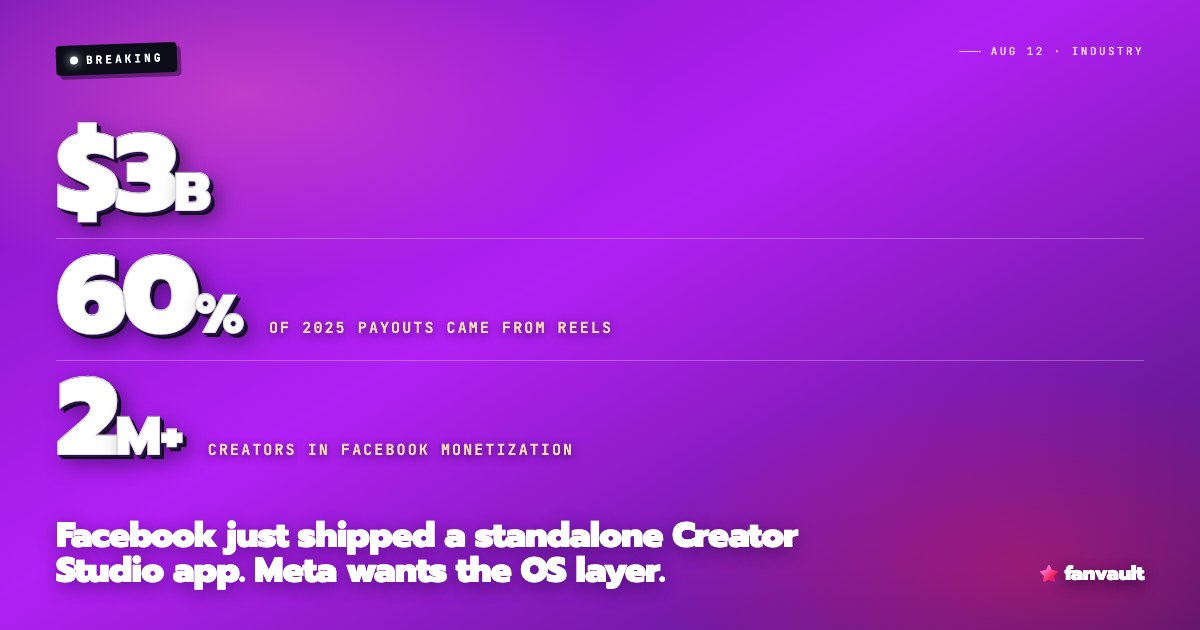
Facebook just shipped a standalone Creator Studio app on iOS, and Meta is not being subtle about the pitch. As of August 12, the app is the front door to a chat-based AI Creator Assistant, an AI comment tool that drafts tone-matched replies, and a daily priorities feed that tells creators exactly what to post and which comments to answer. Meta paid creators nearly $3B in 2025. It wants to keep them.
⚡ Key Takeaways
- Facebook Creator Studio launched as a standalone iOS app on August 12, U.S. and Canada only for now.
- It bundles a chat-based AI Creator Assistant, an AI comment tool that drafts tone-matched replies (creator still approves), and a daily priorities feed.
- Meta paid creators nearly $3B in 2025, up 35% YoY and the highest total ever, with roughly 60% coming from Reels.
- Third Meta move in five months, after March's Creator Fast Track cash program and June's in-app AI Assistant.
- Meta is racing YouTube Studio, TikTok Studio, and paid "creator OS" startups to be the app creators open first every morning.
- Fanvault take: the top of the funnel gets automated, but the monetization layer (subs, DMs, wishlists, drops) is still up for grabs at 8%/92%.
What actually happened?
On August 12, Meta released Facebook Creator Studio as its own iOS app in the U.S. and Canada, per TechCrunch. What used to be a browser dashboard buried inside Meta Business Suite is now a dedicated surface with three headline features. There is the conversational AI Creator Assistant, an AI comment tool that surfaces high-priority comments and drafts replies in each creator's own tone, and a priorities feed that flags posts needing attention.
Every AI-drafted reply still requires the creator to edit and approve it before it posts. The priorities feed shows how far a creator is from their stated goals and which comments are still waiting, per 9to5Mac. This is Meta's third move in five months. Creator Fast Track landed in March, the AI Creator Assistant went live inside the main Facebook app on June 3, and a closed companion-app test surfaced on June 24 before today's public release.
Why does this matter for creators?
Meta is not shipping a feature. It is claiming a category. The pitch is that Facebook, not Notion, not Later, not ChatGPT, should be the first thing a creator opens in the morning. Every workflow that used to live in a browser tab or a third-party subscription is now free inside the app you already post to.
That reframes the incentives. Facebook paid over two million creators last year and grew the pool earning over $10K by more than 30% year over year, per Meta. Roughly 60% of those payouts came from Reels, per RouteNote. Every hour a creator saves inside the walled garden is an hour they never spend evaluating whether TikTok Studio or a paid third-party dashboard would serve them better.
"When should I post?"
An example prompt Meta cites for its new AI Creator Assistant, via TechCrunch's launch coverage
Where does this go from here?
Meta is late but loud. YouTube Studio has had a dedicated app for years, TikTok Studio ships predictive analytics inside a full mobile hub, and independent "creator OS" products (Later, Buffer, Creator OS) charge monthly subscriptions to unify what platforms will not. Meta's play is to give the same thing away for free inside the walled garden and pay the top of the follower pyramid to show up.
Watch what the AI Creator Assistant actually starts recommending. When the "when should I post?" answer nudges Reels over Stories, or Reels over cross-posting from TikTok, that is not neutral advice. It is Meta's ranking algorithm speaking in the second person. Creator Fast Track's $1,000 to $3,000+ a month deals for creators with big followings elsewhere are the carrot; the AI copilot is how Meta gets you to stay.
What does Fanvault think?
Meta is making the top of the funnel more automated. The bottom of the funnel is still up for grabs. Creator Studio can tell a creator when to post and what to say in the replies. It cannot turn a viewer into recurring revenue, and it cannot own the direct relationship with the buyer.
That is the fight Fanvault is in. A creator can let Meta triage their comments and still route their real income (subscriptions, paid DMs, wishlists, auctions of authenticated memorabilia) through a Fanvault storefront that keeps 92% of every dollar at an 8% platform fee. Content Capital, Fanvault's sister platform, is aimed at the same category Meta just declared war on, except across every surface a creator posts to, not just Facebook and Instagram.
Free tools on a walled garden are not a favor. They are a lease. The creators who win in 2026 will use Meta's AI to get seen and then send the audience somewhere they actually own the economics.
Frequently Asked Questions
What is Facebook Creator Studio?
Facebook Creator Studio is a dedicated iOS app that Meta released on
Who can use it and where?
Eligible Facebook creators in the U.S. and Canada can download the app from the App Store today on iOS. Meta has not confirmed an Android release date. The underlying AI Creator Assistant first rolled out inside the main Facebook app on
Does the AI post comment replies on its own?
No. The AI comment tool surfaces the most important comments and drafts a reply in each creator's own tone, but the creator has to edit and approve every reply before it posts. Meta is treating the assistant as a copilot, not an autopilot, at least at launch.
How does this compare to what Facebook already pays creators?
Facebook paid creators nearly
What does this actually change for creators on other platforms?
If you post to Facebook at all, the barrier to keep posting there just dropped again. Meta is trying to make Facebook the creator's daily driver by removing every excuse to leave the app to plan, write, or reply. The counterweight is to make sure the money still flows through a platform where you actually own the relationship with the buyer, not just the app that owns the reach.